Why an Electrical Grounding Electrode System Is Absolutely Critical
Updated: Jan 24
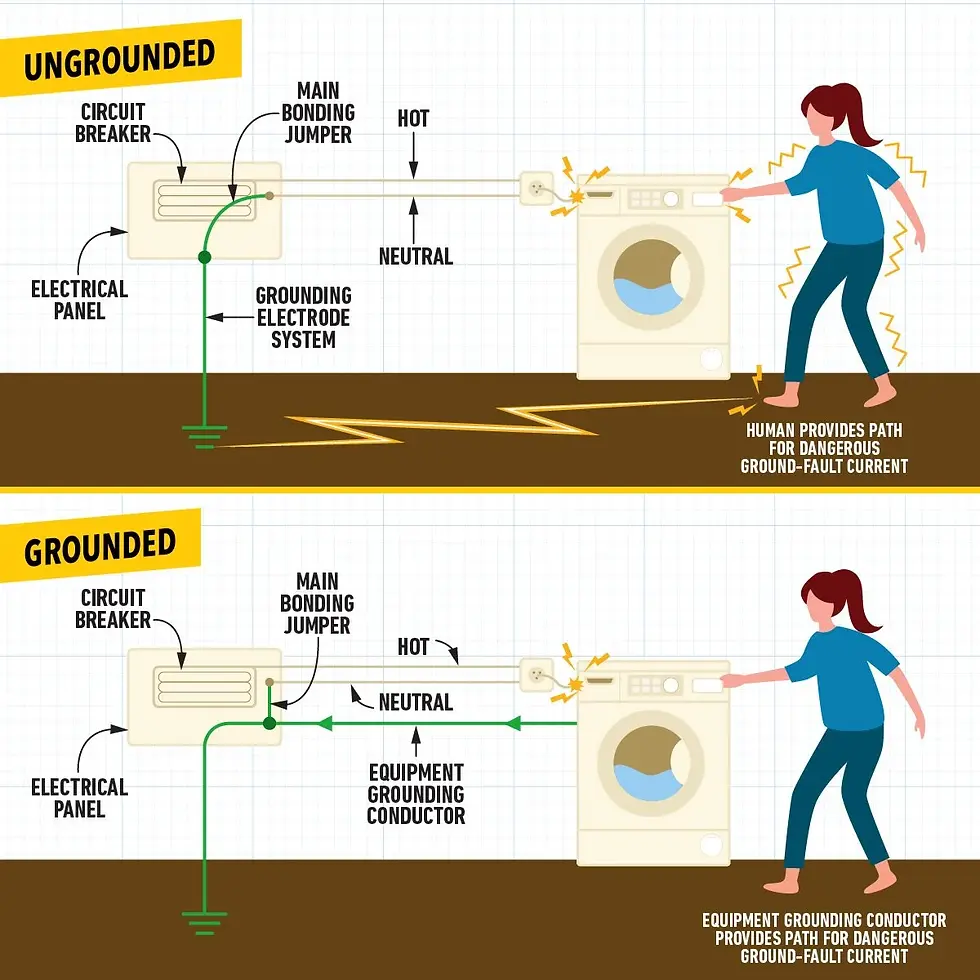
When people think about electrical safety, they often focus on breakers, fuses, or wiring size. Yet one of the most critical—and most misunderstood—components of any electrical installation is the grounding electrode system (GES). This system is not optional, not a “nice to have,” and not just a code requirement—it is a fundamental safety and performance feature of modern electrical systems.
What Is a Grounding Electrode System?
A grounding electrode system is the network of conductors and electrodes that connects an electrical system to the earth. It typically includes components such as:
Ground rods
Concrete-encased electrodes (Ufer grounds)
Metal underground water piping
Ground rings or plates
Bonded structural steel
Together, these elements provide a low-impedance path between the electrical system and the earth.
The Primary Purpose: Stabilizing Voltage
One of the most important roles of the grounding electrode system is voltage stabilization. Electrical systems are designed to operate at a specific voltage relative to earth. Without a proper grounding electrode system, voltage levels can float unpredictably, especially during lightning events, utility surges, or switching operations.
A solid ground reference helps keep system voltages within safe, predictable limits—protecting both people and equipment.
Protection Against Lightning and Surge Events
Lightning does not need a direct strike to cause damage. Nearby strikes can induce massive voltage surges into power lines, data cables, and metal structures. A properly installed grounding electrode system provides a safe path to dissipate this energy into the earth.
Without it, surge energy looks for alternative paths—often through sensitive electronics, building steel, plumbing, or even people. This is how fires, equipment destruction, and life-threatening injuries occur.
Enabling Overcurrent Protection to Work Correctly
Contrary to common belief, grounding is not primarily about “giving electricity somewhere to go.” Its real safety value is in facilitating fast operation of overcurrent devices.
When a ground fault occurs, a low-impedance grounding and bonding system allows fault current to rise quickly. This high fault current causes circuit breakers or fuses to trip almost instantly, removing dangerous voltage from exposed metal parts.
A poor or missing grounding electrode system can result in:
Breakers failing to trip
Prolonged fault conditions
Energized enclosures and equipment frames
Reducing Fire Risk
Electrical fires often start with abnormal conditions: surges, insulation breakdown, or ground faults. A robust grounding electrode system reduces the likelihood that these events escalate into fires by safely directing fault and surge currents away from combustible materials.
In commercial and industrial facilities, grounding failures are a leading contributor to catastrophic electrical incidents.
Protecting Sensitive Electronics
Modern buildings are filled with sensitive electronics—computers, control systems, medical equipment, and automation devices. These systems are especially vulnerable to voltage transients and electrical noise.
A well-designed grounding electrode system:
Reduces electrical noise
Minimizes data errors
Extends equipment life
Improves overall system reliability
This is why data centers, hospitals, and industrial plants invest heavily in grounding design and testing.
Code Compliance Is Only the Minimum
Electrical codes require grounding electrode systems for a reason—but meeting code is only the baseline. Soil conditions, building size, lightning exposure, and equipment sensitivity all influence what a truly effective grounding system looks like.
Simply “driving a ground rod” without proper testing, bonding, and design may technically pass inspection—but still fail to provide real protection.
Final Thoughts
The grounding electrode system is the foundation of electrical safety. It protects lives, prevents fires, safeguards equipment, and ensures reliable system operation. When it is ignored, undersized, or improperly installed, the consequences can be severe—and often invisible until disaster strikes.
Whether you are designing, installing, inspecting, or owning an electrical system, understanding and prioritizing the grounding electrode system is not optional. It is critical.


Comments